Easiload
UX/UI Design, Data analysis, Branding & Identity, Visual Design, Illustration, Mobile Application, B2B
Led design to empower drivers in the transportation industry, providing a user-friendly platform and overcomes challenges for all drivers
Tool:
Figma, Photoshop
Role:
UX/UI Designer

MY ROLE
As a UI/UX Designer in this project, my role is to create an intuitive and visually appealing mobile application that facilitates a seamless connection between drivers and shippers. I am responsible for designing the user interface and user experience, ensuring that the app meets the needs of our primary user, the driver.
Customer Insights & Ideation
Experience Strategy & Vision
Planning & Scope Definition
Design Execution & Validation

THE CHALLENGE
Help Drivers Achieve a More Convenient Transportation Process and Create Deeper Relationships Between Drivers and Shippers
The primary challenge in this project is to design and develop a mobile application that addresses the specific needs of drivers, enabling them to achieve a more convenient transportation process, while also fostering deeper relationships between drivers and shippers.
Convenience in the Transportation Process
One aspect of the challenge is to simplify and streamline the entire transportation process for drivers. This includes optimizing load search and matching algorithms to ensure drivers can easily find available loads that align with their preferences, location, and capacity. Balancing the need for relevant and accurate load recommendations with an intuitive user interface presents a design challenge to create a seamless and efficient experience.
Furthermore, enhancing the route planning and navigation capabilities within the app is crucial. Integrating reliable real-time traffic information, intelligent route suggestions, and optimized directions can significantly improve driver efficiency and reduce transportation time and costs.
Deeper Relationships Between Drivers and Shippers
Another challenge lies in creating an environment that fosters stronger relationships between drivers and shippers. Facilitating effective communication channels within the app, such as in-app messaging or chat functionalities, can help drivers and shippers establish direct and seamless communication. This allows for clearer instructions, real-time updates, and a better overall collaboration experience.
To encourage trust and loyalty, the app should incorporate features that enable drivers and shippers to rate and provide feedback on their experiences. Implementing a reliable and transparent rating system helps build credibility, encourages professionalism, and promotes accountability within the driver-shipper relationship.
Additionally, offering personalized recommendations and tailored load suggestions based on historical data and preferences can help drivers build long-term partnerships with preferred shippers. This requires developing intelligent algorithms and utilizing data analytics to identify patterns and make accurate recommendations.
"How might we provide an effective connection between driver and shipper, while and make this transportation process easy and smoothly?"
Overall, the challenge is to design an app that empowers drivers with a more convenient transportation process while nurturing deeper relationships between drivers and shippers. By addressing these challenges through thoughtful design, intuitive user experiences, and leveraging technology, we can create a platform that enhances efficiency, promotes collaboration, and establishes lasting connections within the transportation industry.
THE APPROACH
Enhancing Convenience and Building Strong Driver-Shipper Relationships
To address the challenges of helping drivers achieve a more convenient transportation process and creating deeper relationships between drivers and shippers, we will adopt the following approach:
User-Centric Design
We will prioritize a user-centric design approach by conducting extensive user research to understand the specific pain points, preferences, and behaviors of drivers. Through interviews, surveys, and usability testing, we will gather insights to inform our design decisions and ensure that the app caters to the unique needs of drivers.
Streamlined Load Management
To enhance convenience, we will implement a robust load management system. This involves designing a user-friendly interface with a large bar search that allows drivers to easily find available loads based on their preferences, location, and capacity. We will employ advanced search algorithms to provide accurate and relevant load recommendations, optimizing the load matching process.
Seamless Communication Channels
To foster deeper relationships between drivers and shippers, we will prioritize effective communication channels within the app. This includes implementing in-app messaging or chat functionalities that allow for direct and timely communication between drivers and shippers. We will design intuitive interfaces that facilitate clear instructions, real-time updates, and efficient collaboration.
Rating and Feedback Systems
To build trust and encourage stronger relationships, we will incorporate rating and feedback systems. Drivers will be able to rate their experiences with shippers, and vice versa. By providing a transparent and reliable rating system, we will promote professionalism, accountability, and the development of long-term partnerships. We will analyze feedback data to continuously improve the app's functionality and user experience.
Throughout the design and development process, we will adopt an iterative approach, continuously gathering user feedback and conducting usability testing to refine the app's functionality and user experience. By collaborating closely with developers and stakeholders, we will ensure that the technology infrastructure supports the app's features and scalability requirements.
"We are developing a cutting-edge solution that establishes a robust and efficient connection between drivers and shippers, significantly enhancing their productivity and operational efficiency."
By following this approach, we aim to create an app that not only enhances convenience and efficiency for drivers but also fosters stronger relationships between drivers and shippers, ultimately revolutionizing the driver-shipper connection process within the transportation industry.
THE DISCOVERY
THE DISCOVERY
DESIGN DETAILS
REFLECTIONS
Based on the challenge and approach outlined above, I initially designed a low-fidelity prototype that aimed to address the needs of drivers in achieving a more convenient transportation process and building deeper relationships with shipper

Subsequently, a usability study was conducted, allowing us to gather valuable insights directly from drivers.


As a result of the usability study, we gained important customer insights that revealed distinct pain points among different groups of drivers. Specifically, three categories emerged: new drivers, older drivers, and non-English speaking drivers. These groups have unique challenges and requirements that must be considered for a successful solution.
New drivers
New drivers expressed difficulties in understanding the logistics details and potential challenges that can arise during the process. To support them, we will develop user-friendly onboarding materials and training resources that provide comprehensive guidance and educate them on industry-specific terminology, processes, and problem-solving techniques. Our aim is to empower new drivers with the knowledge and confidence they need to navigate the transportation industry effectively.
Older drivers
On the other hand, indicated a lack of familiarity with software functions and navigation. To address this, we will prioritize simplicity and ease of use in our design. Clear instructions, intuitive interfaces, and visual cues will be implemented to ensure that older drivers can easily navigate the app and utilize its features without feeling overwhelmed. By providing an interface that aligns with their level of comfort and familiarity, we aim to enhance their user experience.
Non-English speaking drivers
Non-English speaking drivers shared their language-related challenges, which hindered effective communication and usage of the app. To overcome this barrier, we will incorporate language support features, such as multilingual interfaces and translation capabilities. This will enable non-English speaking drivers to access the app in their preferred language, ensuring a seamless user experience and fostering inclusivity.
Building upon these insights, our project aims to create a user-centric solution that addresses the diverse pain points and challenges faced by different groups of drivers. By understanding their specific needs, we will develop an app that provides comprehensive support, improves usability, and overcomes language barriers. Through further research and iterations, we will incorporate driver feedback, refine our design, and create an inclusive and empowering platform.
Ultimately, our goal is to deliver a highly personalized and user-friendly app that caters to the distinct requirements of new drivers, older drivers, and non-English speaking drivers. By taking a user-centric approach and leveraging technology, we aim to bridge the gap between drivers and the logistics industry, providing them with a powerful tool that simplifies their work processes, boosts their efficiency, and fosters success in their transportation endeavors.
The biggest challenge I face...
The most significant challenge encountered in this project revolves around effectively integrating and accommodating the varied pain points of different driver categories within a single, cohesive app solution. Addressing the distinct needs of new drivers, older drivers, and non-English speaking drivers while maintaining a unified user experience poses a complex design and development task.
My earliest design challenge was...
Help Drivers Achieve a More Convenient Transportation Process and Create Deeper Relationships Between Drivers and Shippers.
I was surprised to hear from participants…
"Each of the different categories of drivers focus on different feature."
Improvements in features and tools
Pain Point 1:
New drivers are not familiar with the shipping process.
Solution----
incorporate"tutorial" and "resource" features
Tutorial& guide: Develop a comprehensive onboarding process that includes training modules, interactive tutorials, and documentation to familiarize new drivers with the shipping process. Cover topics such as load assignment, pickup and delivery procedures, safety protocols, and customer service expectations.
In-App Resources and Tips: Provide comprehensive in-app resources and guides that cover emergency procedures, problem-solving techniques, and critical thinking skills. These resources can be in the form of articles, videos, or interactive modules that new drivers can access anytime, allowing them to self-educate and develop their problem-solving abilities.
Pain Point 2:
New drivers lack experience, thinking skills, and methods to deal with emergency problems.
Solution----
Implement the "community" feature
Community Engagement: Build a community platform within the app that allows new drivers to connect, communicate, and seek guidance from experienced drivers. This community can include discussion forums, chat groups, or mentorship programs where new drivers can ask questions, share experiences, and learn from the collective knowledge of the driver community.
Peer-to-Peer Learning: Encourage experienced drivers to actively participate in the community by providing guidance, sharing tips and tricks, and answering questions from new drivers. This peer-to-peer learning fosters a supportive environment where new drivers can benefit from the insights and experiences of their more experienced peers.
Pain Point 3:
There is a strong desire among drivers to receive prompt payment and maintain visibility over their earnings.
Solution----
-
Integrate "get paid faster" feature.
-
Enhance user experience by including an "Earnings" option in the bottom bar, enabling easier access to their earnings information.
Accelerated Payment Options: Offer accelerated payment options to drivers, such as instant or same-day payments for completed shipments. This can be facilitated through partnerships with financial service providers or by implementing your own payment infrastructure to ensure quick and seamless transactions.
Pain Point 4:
-
Older drivers seek a seamless means of contacting customer support for assistance and inquiries.
-
Non-English speaking drivers require language support to effectively communicate with shippers and overcome language barriers.
-
New drivers require timely assistance and support whenever needed to navigate their roles effectively.
Solution----
Offer a eye-catching live chat support feature
Live Chat Support: allows drivers to connect with support representatives in real-time. This enables them to seek timely assistance, ask specific questions, and receive immediate guidance while navigating their roles. Live chat support enhances the onboarding experience for new drivers and helps them overcome any hurdles they may encounter. Hire multilingual support staff or leverage translation tools to assist drivers in their preferred language. Design a user-friendly support interface within the app that older drivers can easily navigate and access.
Design Decision
The function updates effectively address multiple pain points encountered by drivers in the shipping process.
To prioritize the needs of new drivers, comprehensive onboarding resources and tutorials have been incorporated, enabling them to acquire essential knowledge and skills. Additionally, the implementation of a community feature fosters mentorship and support from experienced drivers, facilitating the development of problem-solving abilities. Ensuring prompt payment and improved earnings visibility, the integration of a "get paid faster" feature and an "Earnings" option in the app's bottom bar significantly enhances driver satisfaction. Furthermore, by offering an eye-catching live chat support feature, both older drivers and non-English speaking drivers can readily access timely assistance and communicate effectively with customer support.
To expedite access to customer service when drivers require assistance, utilizing a distinct and visually appealing customer service icon can greatly assist in locating the support function efficiently.

The reordering of these updates emphasizes their respective focus areas, collectively fostering a more efficient and supportive environment for all drivers involved in the shipping process, thereby enhancing the overall driver experience.

These function updates collectively enhance the driver experience and contribute to a more efficient and supportive environment for all drivers involved in the shipping process.

Enhance the Sign up user experience flow
Pain Point 1:
Older drivers lack of familiarity with software function and flow.
Solution----
-
less tech-savvy/ simply app
-
Clear instructions
-
User-friendly interface with clear icons and intuitive navigation
To address the challenge of older drivers' unfamiliarity with software functions and flow, it is essential to provide clear instructions and a user-friendly interface. Implementing concise and easily understandable instructions helps older drivers navigate the software with ease. Additionally, designing a user interface with clear icons and intuitive navigation aids in reducing confusion and enhances the overall user experience for older drivers. By prioritizing simplicity and ease of use, the software becomes more accessible and accommodating for older drivers, allowing them to overcome their familiarity barriers.
Pain Point 2:
Language barriers can pose challenges for non-English speaking drivers, hindering effective communication and understanding.
Solution----
Off offers language preferences during the onboarding/sign up flow
To address the language challenges faced by non-English speaking drivers, it is beneficial to provide language preference options during the onboarding or sign-up process. This allows drivers to select their preferred language from the available choices, ensuring that the subsequent app interface, notifications, and communication are presented in a language they are comfortable with. By accommodating different language preferences, the platform promotes inclusivity and facilitates smoother communication for non-English speaking drivers.

Design Decision
1.Force users to register and fill in their phone.
The decision to force users to register when they open the app involves a trade-off between user experience (UX), business goals, and technology considerations.
User Experience (UX)
-
On the positive side, requiring registration upfront can help personalize the user experience and tailor app features to individual drivers.
-
By having users create an account from the beginning, you can collect essential information and set preferences to deliver a more customized and relevant experience.
-
Registration allows for personalized communication, notifications, and recommendations, enhancing the overall user experience by providing relevant and timely information.
Business Goals
-
Requiring registration upfront can help you build a user database and gather valuable user information for targeted marketing, analytics, and user research purposes.
-
Having users registered early on allows you to establish a direct channel of communication with them, enabling future engagement, updates, and promotional activities.
-
Registration also helps ensure that users are committed and engaged with your app, as they have made the effort to create an account.
Technology Considerations
-
Requiring registration upfront allows you to establish user authentication and security measures right from the start, protecting user data and preventing unauthorized access.
-
It provides a foundation for user management, account settings, and personalized features that can be easily scaled as your app grows.
-
Registering users early helps to establish a consistent and unique identity for each user, making it easier to manage data and ensure accurate tracking and reporting.

2. Opt for text-only or combined text and icon elements for seamless identification.
To ensure easy recognition and comprehension, consider using both text and icons in conjunction within the software interface. This approach caters to different user preferences and promotes accessibility. By displaying relevant text alongside icons, older drivers can quickly identify and understand the functions and features within the software. This combination of text and icons enhances clarity and reduces ambiguity, ultimately improving the overall user experience for older drivers.

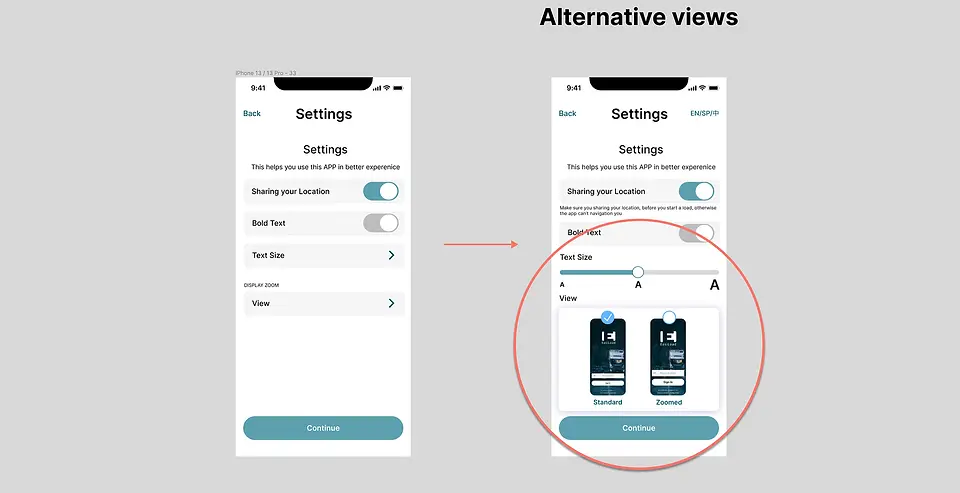
3.Enhance settings page with clear features and images for easy navigation and customization by older drivers.
To facilitate a seamless user experience for older drivers, it is advisable to incorporate clear and visually appealing representations of all features, combined with images, on the settings page. This approach provides a comprehensive overview of the available features in a single location, allowing drivers to easily access and modify their preferences. By incorporating visually descriptive images alongside the feature descriptions, older drivers can quickly grasp the purpose and functionality of each option. This clear and visually enhanced settings page promotes ease of use and facilitates efficient navigation for older drivers, ensuring they can customize their software experience with confidence.
Enhance the Search function
Pain Point 1:
Veteran drivers face challenges in inputting information efficiently due to traditional text-based input methods.
Solution----
Introduce a voice input feature
Voice Input Method: Introduce a voice input feature that allows veteran drivers to input information conveniently by speaking instead of relying solely on text-based input methods. This solution aims to address the pain point of inefficiency and potential difficulties experienced by veteran drivers when manually entering information.
Design Decision:

Pain Point 2:
Users face difficulties in finding relevant information due to limited search functionality.
Solution----
-
Offering both a map and a list view provides users with two distinct ways to access search results.
-
Simplify the filtering process to ensure that only the main relevant matches are retained
Enhanced Search Functionality:
-
Map View: Visualize search results on an interactive map for easy exploration and location-based information.
-
List View: Present search results in a structured list format, allowing users to quickly scan and access relevant details.
Streamlined Filtering Options: Simplify the search filtering system by including only the most essential and relevant options. Focus on the primary criteria that users commonly utilize to refine their searches. Removing unnecessary or rarely used filters will declutter the interface and streamline the filtering process, ensuring that users can quickly identify the options that matter most.
Clear Visual Indicators: Implement clear visual indicators or labels to differentiate between primary and secondary matches. Highlight the most relevant matches prominently, enabling users to identify and retain them easily while filtering their search results. This visual hierarchy ensures that users can quickly assess the relevance of each match without confusion or ambiguity.
Design Decision:
Initially, I prioritized simplicity and minimal technology in the initial design by placing the filter in the upper right corner. However, upon reevaluation, I discovered that this approach hindered the search for old drivers. As a result, I ultimately decided to filter only the essential elements while accommodating a simpler, less tech-savvy user experience.


Design Specs
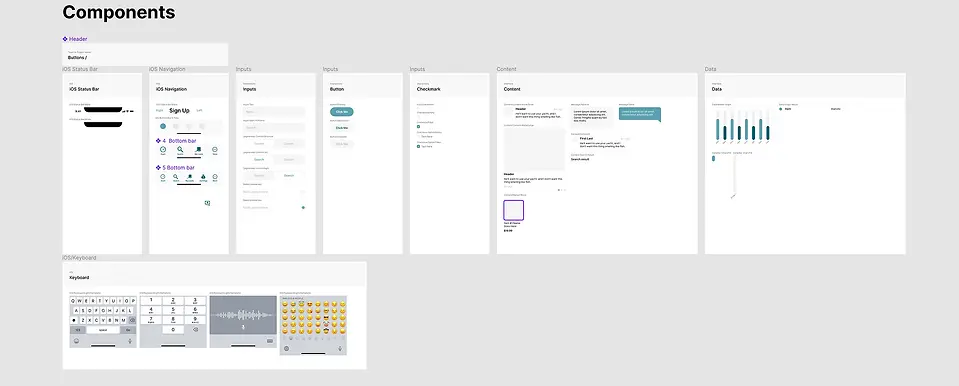
The design specifications outline the key elements and guidelines that will govern the visual and interactive aspects of the application. These specifications serve as a blueprint for the design team, ensuring consistency and coherence throughout the development process. The design specs include details on typography, color schemes, layout grids, and component styles, defining the overall visual identity and user interface of the application. Additionally, interaction design guidelines specify the behavior of interactive elements such as buttons, forms, menus, and animations, ensuring a seamless and intuitive user experience. The design specs also consider responsive design principles, accommodating various screen sizes and devices. By adhering to the design specs, the development team can create a visually appealing and user-friendly application that aligns with the project's goals and enhances user engagement
Design Decision
1. Design and establish logical parameters for the search bar functionality.
Size: Increase the size of the search bar to ensure it is prominent and easily accessible for drivers, who are the primary users of the app. Enlarge the width and height of the search bar to accommodate longer search queries and make it visually distinct on the screen.
Placement: Position the search bar prominently at the top of the interface, preferably in the header section, to enhance its visibility and accessibility. This ensures that it remains consistently present across different screens and provides drivers with quick access to search functionality.
Iconography: Utilize a magnifying glass icon within the search bar to signify its purpose and aid in visual recognition. The icon should be clear, recognizable, and positioned inside the search bar as a clickable element.
Auto-Suggestions: Implement an auto-suggestion feature that provides relevant search suggestions as users type in the search bar. These suggestions can help users find popular or previously searched items quickly, improving the efficiency of the search process.
The decision to use a large bar search in the app's design, prioritizing the driver's ability to search and find loads, involves trade-offs that consider user needs, business goals, and technology considerations.
User Needs:
-
Drivers, being the primary users, have a critical need to search and find available loads efficiently and quickly. Prioritizing the search functionality by using a large bar search prominently on the app's interface helps cater to this need.
-
A large search bar provides a prominent and easily accessible entry point for drivers to initiate load searches, allowing them to quickly enter search queries or filters.
-
The size and placement of the search bar ensure that it stands out and is easily discoverable, enabling drivers to initiate load searches with minimal effort and without needing to navigate through multiple screens or menus
Business Goals:
-
Prioritizing the search functionality aligns with the core business goal of connecting drivers with available loads. By making it easier for drivers to search and find loads, you facilitate their engagement and increase the chances of successful load assignments.
-
A large search bar signals to drivers that finding loads is a central feature of the app, which can attract and retain more drivers on the platform. This, in turn, benefits the business by increasing the number of available drivers to fulfill shipping requests.
Technology Considerations:
-
Implementing a large bar search requires careful consideration of the underlying technology and infrastructure to ensure efficient and accurate search results.
-
The app needs to leverage robust search algorithms and data indexing to provide relevant and real-time load results based on driver input.
-
The technology stack should support fast retrieval and processing of search queries, even as the number of drivers and available loads grows.
However, it's essential to balance the prominence of the search bar with other important app features and functionalities. Consider the following mitigations:
-
Visual Hierarchy: While the search bar should be prominently displayed, ensure that other critical features and functions, such as driver profile, notifications, or settings, are also easily accessible and visually distinguishable. Maintain a clear visual hierarchy to guide users and provide a balanced user experience.
-
Intelligent Recommendations: Alongside the search functionality, consider incorporating intelligent load recommendations or personalized suggestions based on a driver's preferences, location, or historical data. This can enhance the overall user experience and provide alternative ways for drivers to discover relevant loads.

2. Rating and Feedback Systems
To enhance credibility and authenticity, implement a scoring system that allows users to provide feedback on the performance of drivers and shippers. This feature promotes transparency and accountability in assessing their performance.

Throughout the research and design process for this app, I have gained valuable insights and learned several important lessons. Firstly, understanding the needs and priorities of the primary users, in this case, the drivers, is crucial for designing a successful product. By recognizing their main tasks, such as searching for loads, I realized the importance of prioritizing relevant features and optimizing the user experience to support these tasks effectively.
Additionally, I have come to appreciate the significance of striking the right balance between business requirements and technological capabilities. Trade-off decisions must be made to ensure the app meets both user and business needs. For instance, the decision to enforce registration at app launch aligns with the business objective of user acquisition, while considering potential drawbacks such as user inconvenience. These trade-offs require careful consideration to achieve a solution that benefits all stakeholders.
Furthermore, addressing pain points and providing suitable solutions is essential for enhancing user satisfaction. By acknowledging and finding solutions for challenges faced by new drivers, experienced drivers, older drivers, non-English speaking drivers, and users seeking prompt payments, the app can provide a more inclusive and supportive environment.
Lastly, I have gained insights into the importance of establishing clear design specifications that guide the visual and interactive elements of the app. These specifications help maintain consistency, facilitate collaboration between design and development teams, and ensure a coherent and user-friendly experience for drivers.
HOWEVER....
If given the opportunity to embark on a similar project again, there are several aspects I would approach differently to further enhance the design process and outcomes. Firstly, I would invest more time and effort in conducting extensive user research and user testing early on. By gathering comprehensive insights and feedback from the target user group, I can better understand their pain points, preferences, and behaviors, which would directly inform the design decisions. This proactive approach would enable me to create a more tailored and intuitive user experience that truly meets the needs of the drivers.
Secondly, I would emphasize the importance of iterative design and agile methodologies. Instead of following a linear design process, I would incorporate regular feedback loops and usability testing throughout the development cycle. This iterative approach would allow for continuous improvement and refinement of the app's design, ensuring that any design decisions made are validated by real user feedback and data.
Additionally, I would allocate more resources and time for usability testing with diverse user groups, including both experienced and novice drivers. By involving a wider range of users in the testing phase, I can capture a broader spectrum of perspectives and identify potential pain points or usability issues that may have been overlooked initially.
Lastly, I would establish stronger collaboration and communication channels with the development team. By fostering a close partnership and maintaining open lines of communication, we can ensure a seamless integration of design and development processes. Regular meetings, joint design reviews, and shared project management tools would enable us to work more efficiently and effectively towards a common goal.
By implementing these adjustments, I would strive to create an even more user-centered and optimized app design, delivering a superior experience for drivers and fulfilling their needs more comprehensively.